

Are you waking up with jaw pain, headaches, or sensitive teeth?
Discover effective strategies and professional solutions from Solace Dental Clinics to protect your smile from the hidden stresses of teeth grinding.
You might not even know you’re doing it. For many, the subtle, often unconscious habit of grinding or clenching their teeth (medically known as bruxism) is a silent saboteur of oral health. It typically happens while you sleep, making it notoriously difficult to self-diagnose. Yet, the impact can be profound, leading to a cascade of painful symptoms and serious dental damage.
At Solace Dental Clinics, we frequently see patients whose unexplained headaches, jaw discomfort, or increasingly sensitive teeth all trace back to bruxism. Our goal isn’t just to treat the symptoms, but to help you understand the root causes and provide effective, lasting solutions. We believe in empowering you with knowledge, and today, we’re diving into what you can do to stop grinding and protect your precious smile.
What Exactly Is Bruxism?
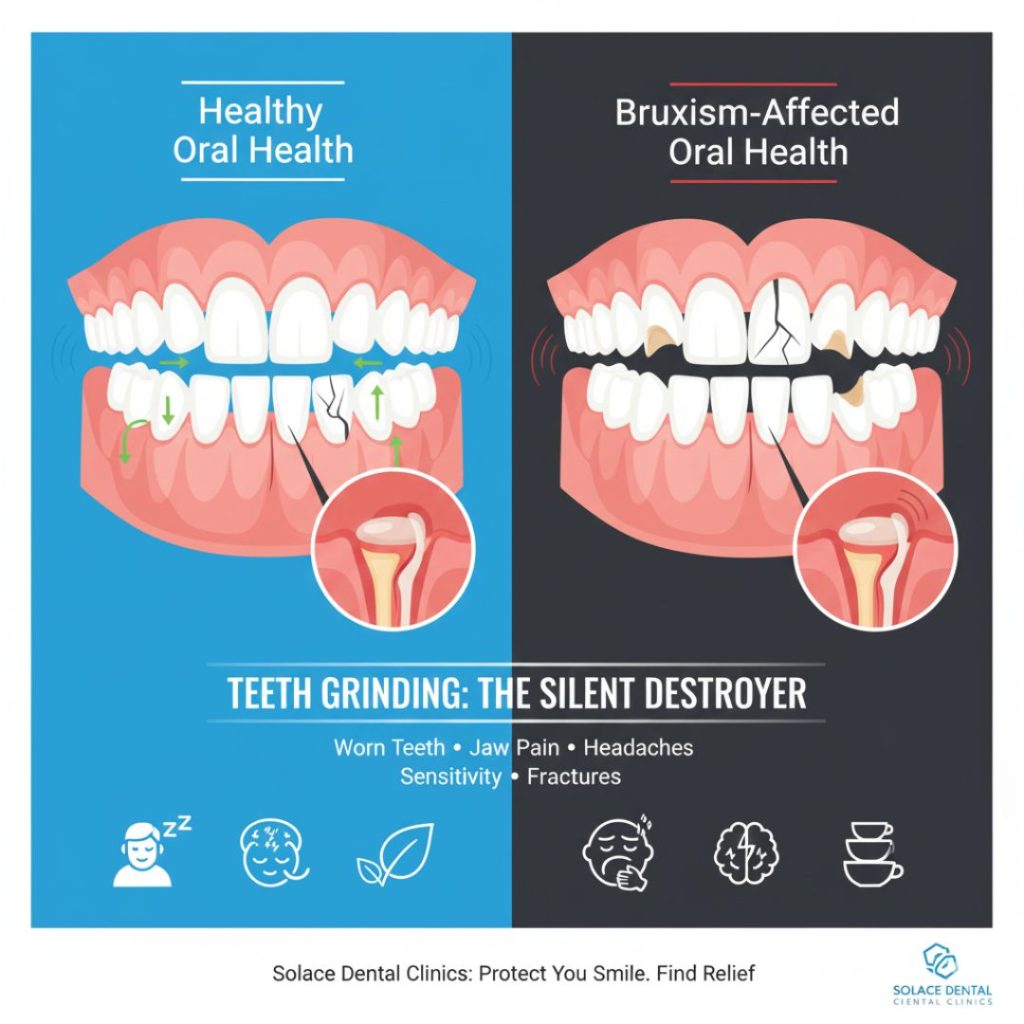
Bruxism is the involuntary clenching, gnashing, or grinding of teeth. It can occur during the day (awake bruxism) but is most common and damaging during sleep (sleep bruxism). While occasional grinding isn’t usually harmful, chronic bruxism can lead to significant problems.
Common Signs and Symptoms to Watch For:
-
Worn-down, flattened, or fractured teeth: The most visible sign of long-term grinding.
-
Increased tooth sensitivity: Due to enamel wear, exposing the dentin.
-
Chipped or loose teeth.
-
Sore or painful jaw muscles: Especially noticeable upon waking.
-
Tired or tight jaw muscles.
-
Locking of the jaw: A temporary inability to fully open or close your mouth.
-
Headaches: Often a dull, persistent headache originating in the temples.
-
Earaches: Though not a primary ear problem, referred pain from the jaw.
-
Facial pain.
-
Damage to the inside of your cheek from chewing.
-
Sleep disruption (for you or your partner, who might hear the grinding).
If you recognize any of these symptoms, it’s time to take action.
Why Do We Grind Our Teeth? Understanding the Causes
Bruxism is often multifaceted, with several contributing factors:
-
Stress and Anxiety: This is arguably the most common culprit. Daily stressors, emotional tension, anger, frustration, or anxiety can manifest as clenching or grinding, particularly during sleep.
-
Sleep Disorders: Sleep bruxism is often linked to other sleep-related conditions, such as sleep apnea.
-
Malocclusion (Misaligned Bite): If your teeth don’t fit together perfectly, your jaw muscles might work overtime to find a comfortable position, leading to grinding.
-
Certain Medications: Some antidepressants (e.g., SSRIs) can have bruxism as a side effect.
-
Lifestyle Factors: Excessive caffeine or alcohol consumption, as well as smoking, can aggravate bruxism.
-
Underlying Medical Conditions: Rarely, bruxism can be associated with neurological conditions like Parkinson’s disease or Huntington’s disease.
What You Can Do at Home: Self-Care Strategies
While professional help is often necessary, several home-based strategies can help reduce the severity of grinding:
-
Stress Management: This is paramount. Incorporate relaxation techniques into your daily routine:
-
Mindfulness and Meditation: Even 5-10 minutes a day can make a difference.
-
Yoga or Deep Breathing Exercises: Helps relax both mind and body.
-
Warm Bath before Bed: Promotes overall muscle relaxation.
-
-
Jaw Muscle Relaxation:
-
Warm Compresses: Apply a warm, moist washcloth to your jaw area before bed.
-
Gentle Jaw Stretches: Ask your dentist or a physical therapist for recommended exercises.
-
-
Avoid Stimulants: Limit caffeine and alcohol, especially in the hours leading up to bedtime. Avoid smoking altogether.
-
Mindful Awareness (for awake bruxism): If you find yourself clenching during the day, consciously try to relax your jaw. Keep your teeth slightly apart, with your tongue resting gently on the roof of your mouth.
-
Improve Sleep Hygiene: Establish a consistent sleep schedule, create a dark, quiet, cool bedroom environment, and avoid screens before bed.
When to Seek Professional Help: Solace Dental Solutions
While self-care can help manage symptoms, professional intervention from Solace Dental Clinics is crucial for an accurate diagnosis and effective long-term treatment.
Custom Night Guards (Occlusal Splints): This is often the first line of defense. A custom-fitted night guard, made from durable acrylic, creates a protective barrier between your upper and lower teeth. It absorbs the forces of grinding, preventing tooth wear, reducing jaw muscle strain, and often alleviating headaches. Unlike over-the-counter options, a custom guard fits precisely, ensuring comfort and maximum effectiveness.
Addressing Underlying Bite Issues: If your bruxism is related to an uneven bite or missing teeth, your Solace dentist may recommend:
Orthodontic Treatment: To correctly align teeth.
Restorative Dentistry: Crowns, fillings, or bridges to rebuild worn teeth and balance your bite.
Biofeedback and Lifestyle Counseling: We can provide guidance on stress reduction techniques and lifestyle modifications tailored to your specific needs.
Botox Injections: In severe, persistent cases where other treatments haven’t fully succeeded, small doses of Botox can be injected into the jaw muscles. This temporarily weakens the muscles, reducing their ability to clench powerfully, thereby relieving pain and protecting teeth. This is a specialized treatment considered after other options.
Referral to Specialists: If sleep apnea or severe anxiety is suspected, we may refer you to a sleep specialist or therapist for co-management.
Don’t Let Grinding Grind Down Your Smile
Teeth grinding is more than just an annoyance; it’s a serious threat to your oral health and overall well-being. Ignoring it can lead to irreversible tooth damage, chronic pain, and costly dental repairs in the future.
At Solace Dental Clinics, we are equipped with the expertise and technology to accurately diagnose bruxism and provide a range of solutions. Don’t suffer in silence. If you suspect you might be grinding your teeth, contact us today. Let’s work together to protect your smile, alleviate your discomfort, and help you find lasting relief. Chat with an expert now